
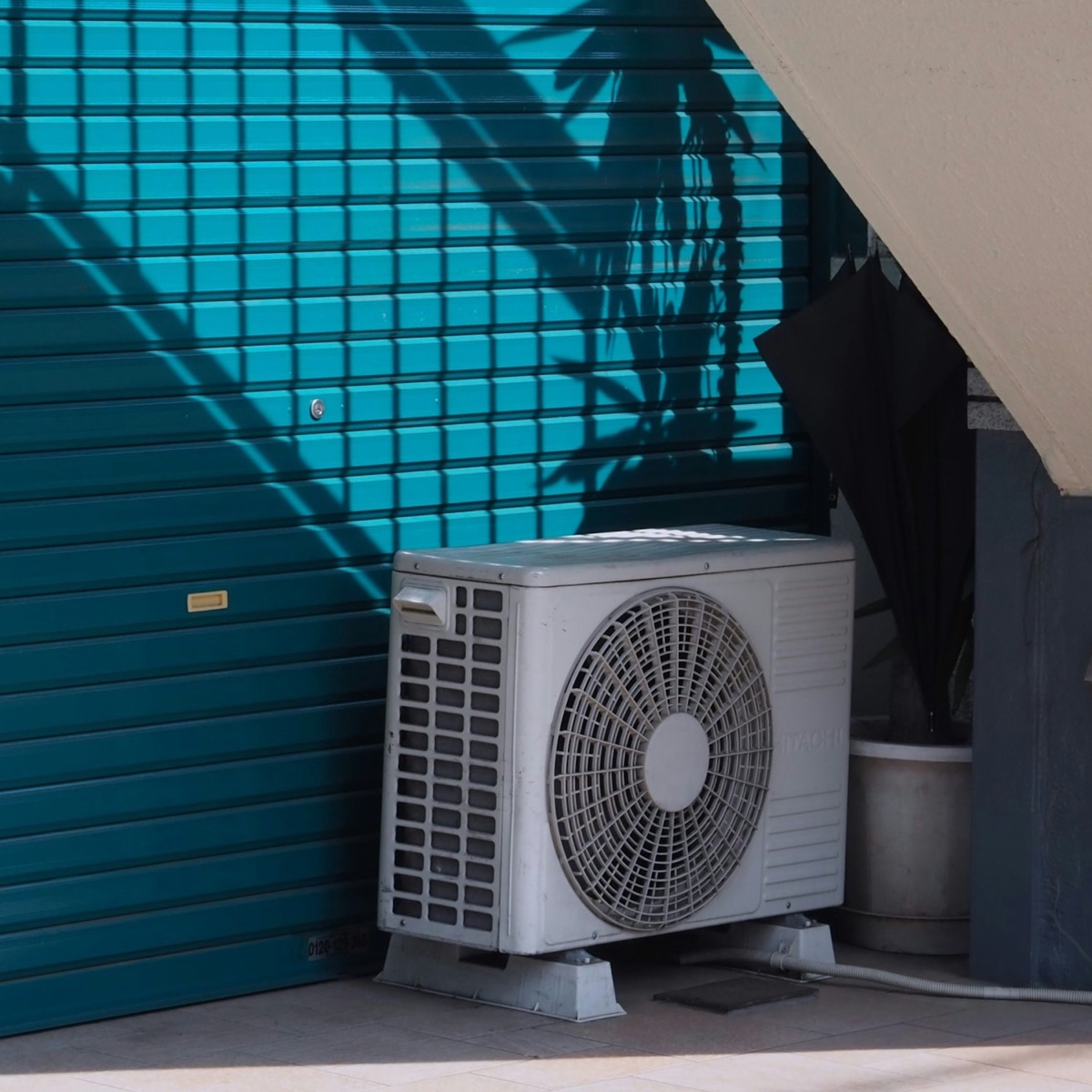
Mini-split ground stand
Powder-coated steel stand that lifts the condenser 12–18 in. above grade — clear of snow, splash, and debris. Rated to 450 lb, isolation pads included.
Ships in 3–5 business days
Order online with JavaScript enabled, or email us and we'll take your order directly.
- MaterialPowder-coated steel
- Load rating450 lb
- HeightAdjustable, ~12–18 in.
- FeetFoot pads with anchor holes
- IncludedRubber isolation pads
- FitsCondensers up to 36,000 BTU
About this ground stand
A mini split ground stand lifts the outdoor condenser off grade and onto a rigid, powder-coated steel frame — the right base whenever the ground itself is the problem. The legs adjust from roughly 12 to 18 in., the frame carries 450 lb (well beyond the 90–180 lb most residential condensers weigh), and rubber isolation pads sit between the unit's feet and the rails so compressor vibration doesn't ring through the steel. Foot pads with anchor holes let you fasten the stand to a concrete pad, footings, or ground anchors where wind or frost heave is a concern.
Why elevate the condenser
- Heat-pump climates: a mini-split running in heating mode produces defrost water all winter and needs its coil above the snow line. A condenser buried in snow — or sitting in its own refrozen defrost melt — loses capacity and can damage the fan. Set the stand height above your typical accumulated snow depth.
- Splash and debris: elevation keeps rain splash, mud, grass clippings, and leaves out of the coil and off the base pan, which slows corrosion and cuts down on coil cleanings.
- Service access: raising the unit puts the service valves and electrical cover at a workable height, and airflow under the unit helps the base pan dry out.
Stand, pad, or wall bracket?
Three ways to support an outdoor unit, three different jobs. A condenser pad is the simplest and cheapest: fine for well-drained sites in mild climates where snow and splash aren't in play. A wall-mount bracket — see our mounting brackets category and the 1.5-ton wall bracket — gets the unit completely off the ground, but it transmits some vibration into the structure and puts the unit's weight on your wall. The ground stand is the middle path: full elevation without loading the wall, and it works where siding, brick veneer, or a bedroom on the other side of the wall rules a bracket out.
Installation notes
Set the stand on firm, level ground or a small concrete pad, level the frame with the adjustable legs, and anchor the feet. Keep the manufacturer's required clearances around the coil, and leave a gentle strain-free loop in the line set where it drops to the unit — the extra height changes your line-set routing, so measure the run before ordering. Our line-set install guide covers routing and flare connections at the condenser.